
Sound is a mechanical vibration that propagates as an acoustic wave through a transmission medium such as gas, liquid, or solid. The way sound travels depends on the medium. Water, due to its high elasticity and tightly bonded molecules, is an excellent medium for sound transmission. In fact, sound travels nearly five times faster in seawater (~1500 m/s) than in air (~300 m/s). At low frequencies, underwater sound can travel hundreds of kilometers with little loss in energy—enabling long-distance animal communication, but also potentially resulting in far-field impacts.
Factors influencing underwater sound transmission include the sound frequency, water depth, density stratification (driven by temperature and pressure), seabed morphology, and substrate type. Therefore, underwater sound behavior is complex. The marine underwater “soundscape” consists of biological, geophysical, and anthropogenic sounds occurring at a given place and time.
Among anthropogenic sources, fishing activities contribute significantly to underwater sound: sounds from small, medium, and large vessels; various types of echo sounders and sonars used to locate target species; and pingers used by fishers to mark gear.
- Large commercial vessels (over 100 m) produce loud, predominantly low-frequency sounds (180–195 dB; 10–50 Hz), mainly from propeller cavitation, on-board machinery, and hydrodynamic flow. They dominate the low-frequency soundscape in many marine environments globally.
- Medium-sized vessels (50–100 m), including many fishing boats, generate broadband sound in the 165–180 dB range, mostly below 1 kHz. These vessels often operate in coastal and continental shelf waters, overlapping with marine fauna both spatially and temporally.
- Small vessels (up to 50 m) with inboard or outboard engines emit mid-frequency sounds (1–5 kHz) at source levels of 150–180 dB. Though their acoustic impact is geographically limited, they can dominate soundscapes in bays, harbors, and estuaries. Recreational boats—linked to recreational fisheries—are key contributors to mid-frequency ambient sound in coastal habitats.
Sonars, especially fish-finding sonars (24–200 kHz), are widely used on commercial and recreational vessels and operate year-round in shallow shelf seas. Though lower in source level than military sonars, their widespread use makes them a notable contributor to underwater noise.
Acoustic Harassment Devices (AHDs) such as pingers are used to deter pinniped predation at fish farms and fisheries. With high-intensity signals (≥185 dB) ranging from 2 to 40 kHz, AHDs can significantly elevate local underwater noise levels, especially in areas of intensive aquaculture.
Noise is defined as sound that is loud, unpleasant, or disruptive. All underwater sound comprises sound pressure and particle motion. Marine mammals are primarily sensitive to pressure, but may also respond to particle motion. Fish and invertebrates detect particle motion, and some fish species are sensitive to both components, particularly those with swim bladders functioning as pressure-to-motion converters. Additionally, particle motion can propagate through the seabed, affecting benthic habitats.
Anthropogenic underwater noise is known to cause a variety of direct, indirect, and cumulative impacts on marine species—from no observable effect to behavioral disruption, hearing loss, or even mortality. Effects depend on multiple factors: noise duration, frequency, intensity, overlap with marine organisms, and the context of exposure. Despite scientific and methodological challenges, there is growing evidence that anthropogenic underwater noise can have adverse consequences for marine wildlife, ecosystems, and fisheries-dependent communities.
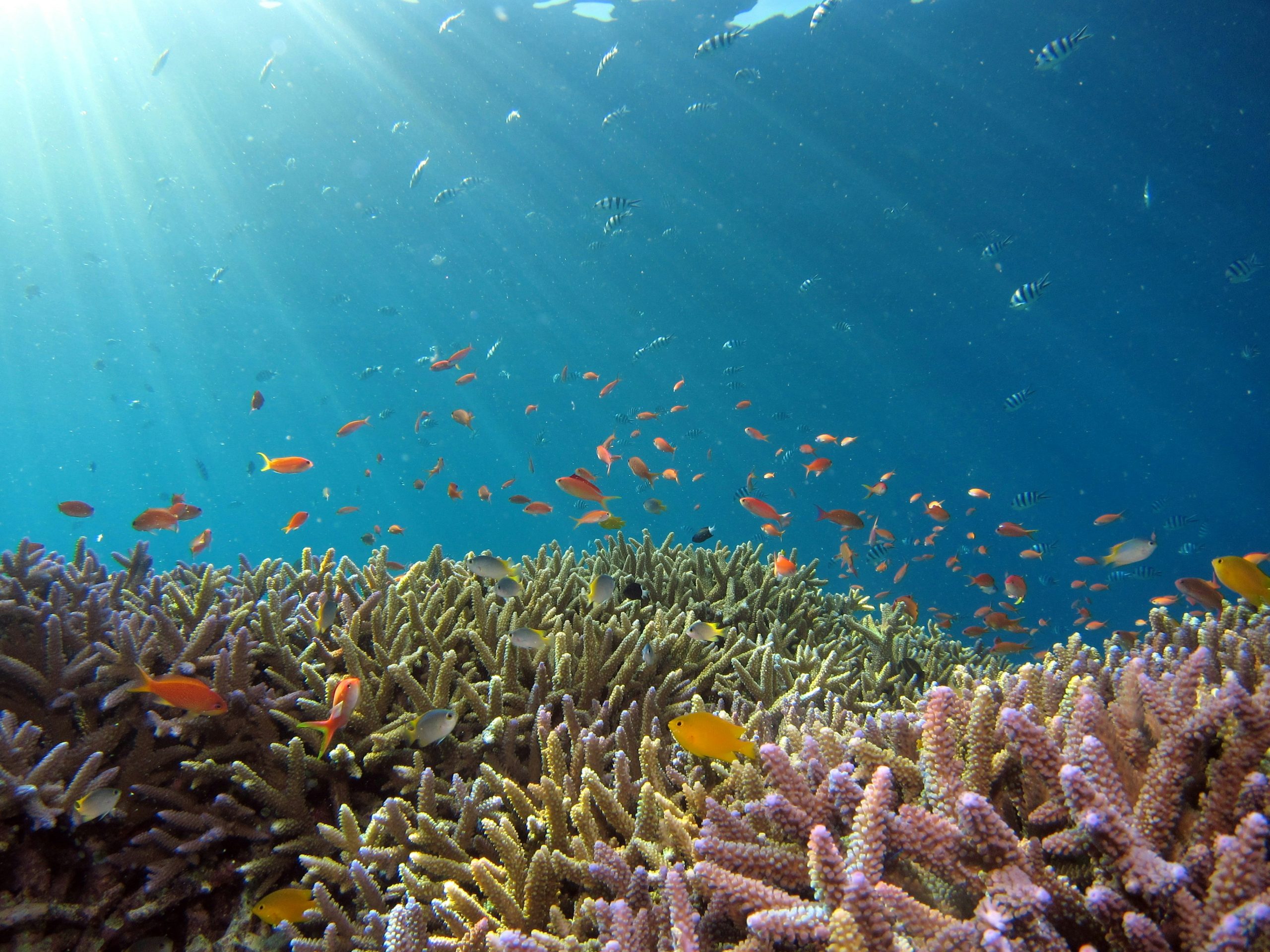
Cover image by Hiroko Yoshii on Unsplash