01. About the project
Workplan
Interdisciplinary approach and interaction of REFEST project
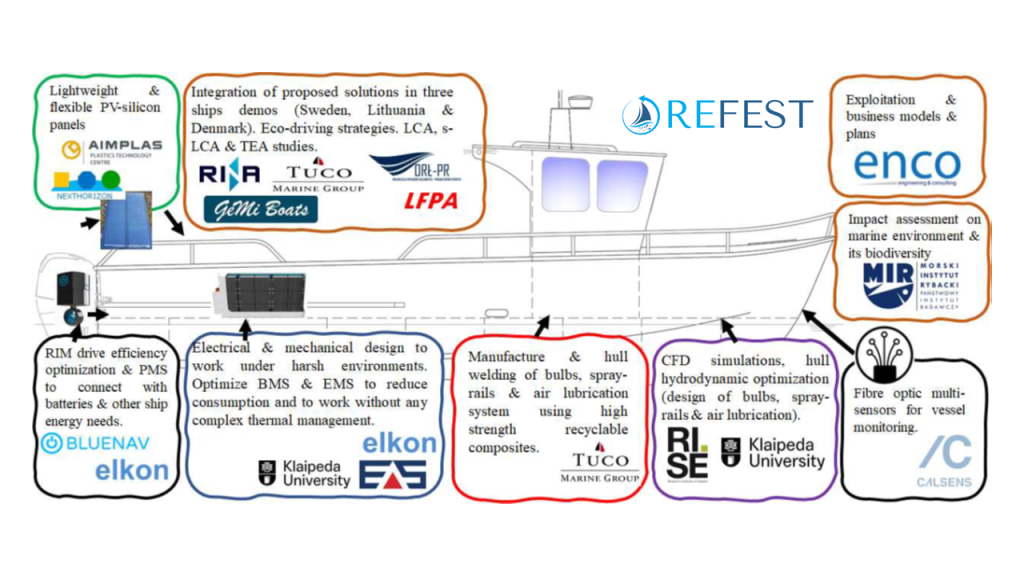
The combination of knowledge, experience and skills can be clearly observed in the consortium, which is built based on the close cooperation of research organizations (AIMPLAS, RISE, MIR & KU) with a broad experience in plastic materials, surface characterization, surface modification, composite-composite welding, naval design, simulation tools, etc
Companies with expertise on the production of composite plastics parts (TUCO), lithium batteries (EAS), RIM drive engine (BLUENAV), EMS/PMS tools (ELKON), shipyards and shipowners (GEMI, LFPA & TUCO), RINA-C engineering company specialist in social, economic, and environmental studies, ENCO in business & IPR issues and LFPA will be in charge of communication and dissemination to allow the implementation of proposed innovations along the fishing fleets in North and Baltic sea & other European fleets with small fishing vessels.
The novelty of the REFEST project is to develop several technologies to reduce the impact and the cost and increase performance of current ship retrofitting practices. For this reason, REFEST will use a combination of different disciplines to achieve the expected results.
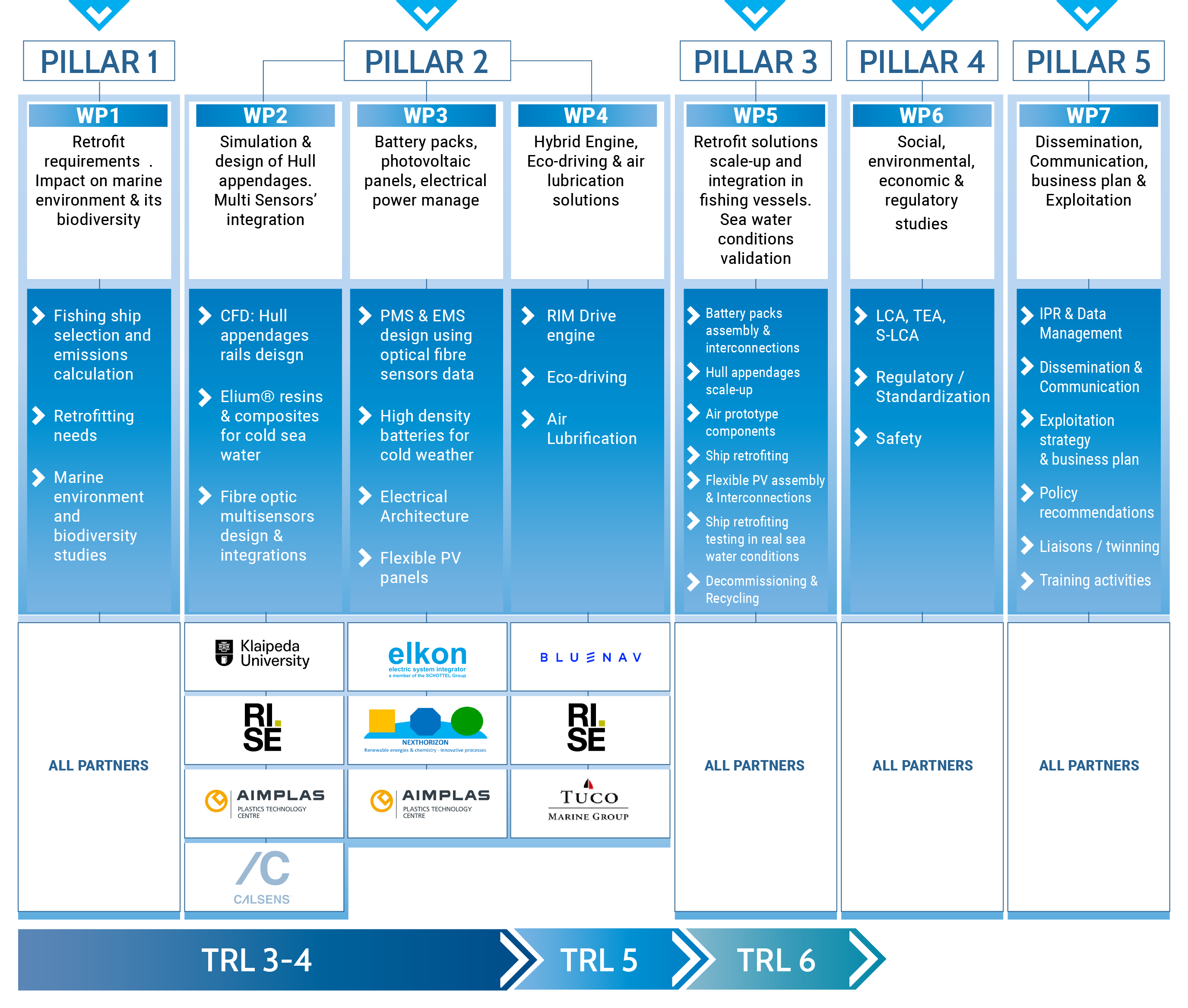
The overall methodological approach in 36 months REFEST project will be based on 5 distinct PILLARS and implemented in 8 WPs. All materials and technologies development starts from TRL3-4, consolidating TRL5 when proposed technologies are implemented and demonstrated in three fishing vessels located in Denmark, Lithuania, and Norway and to reach TRL6 as objective 8 details.