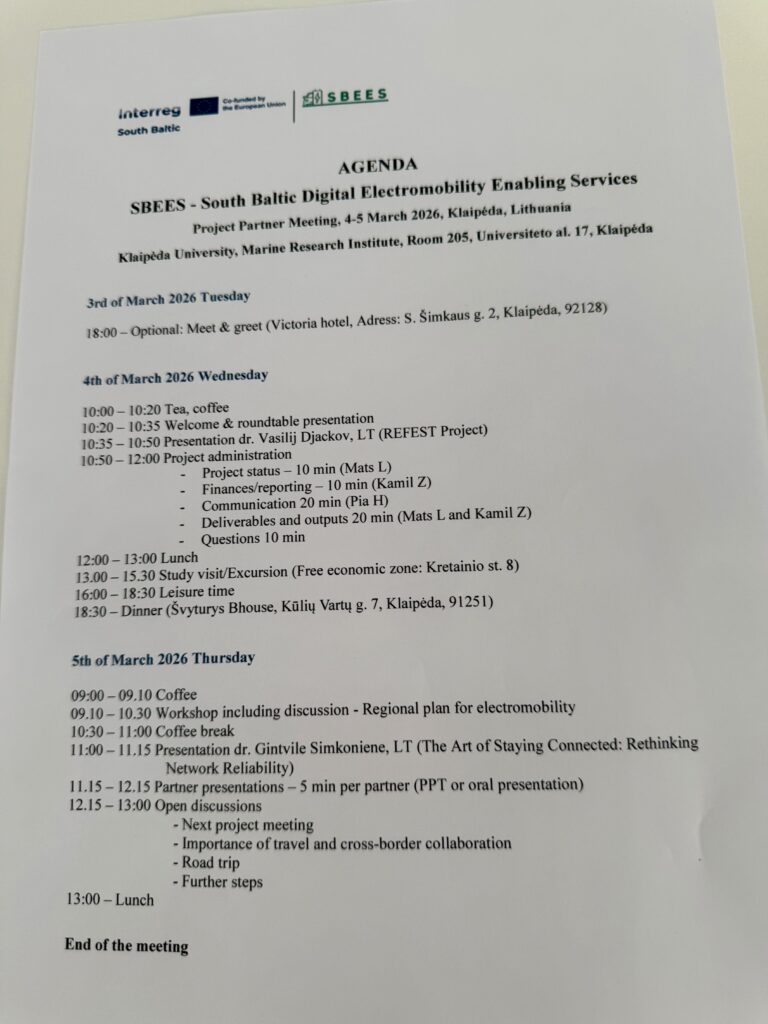
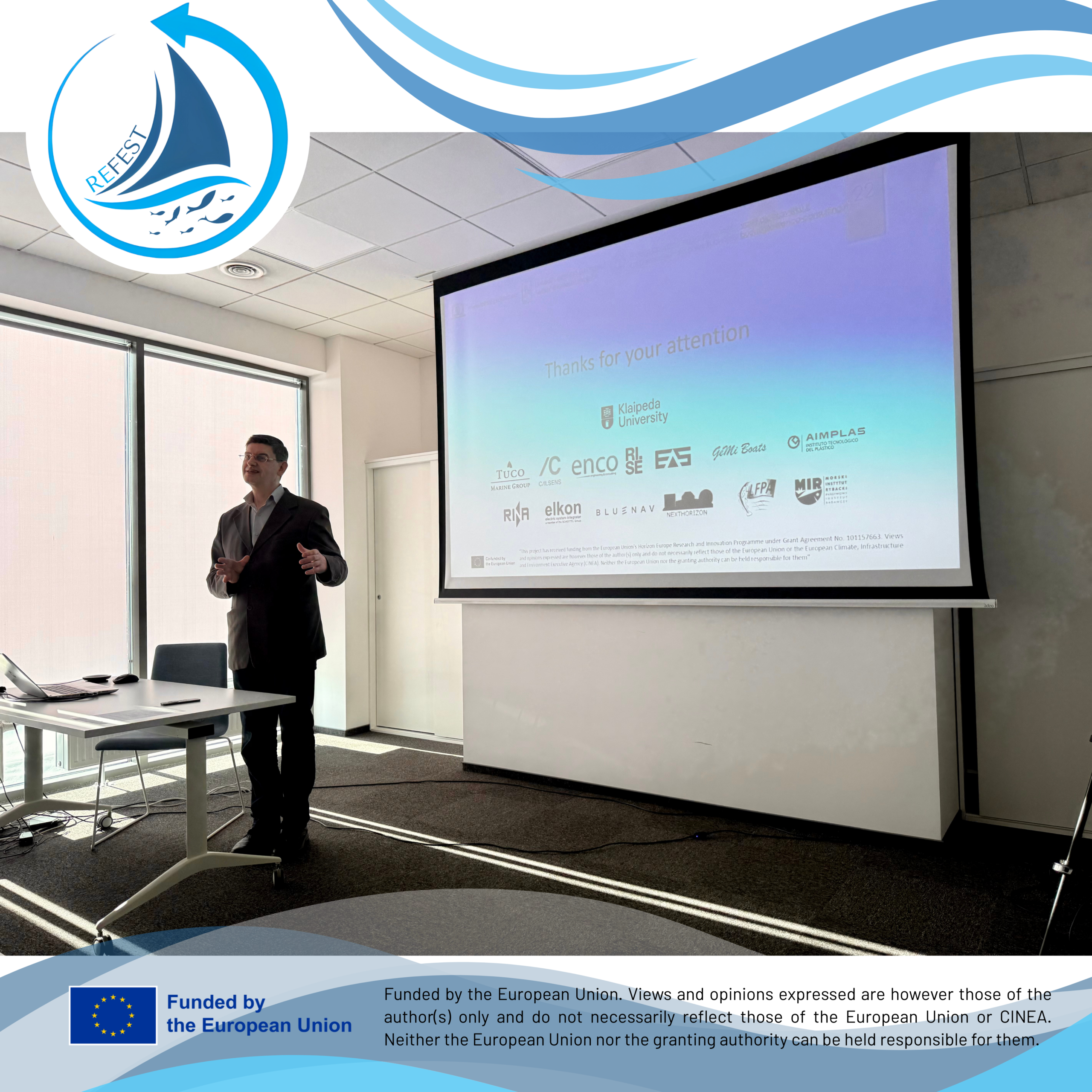
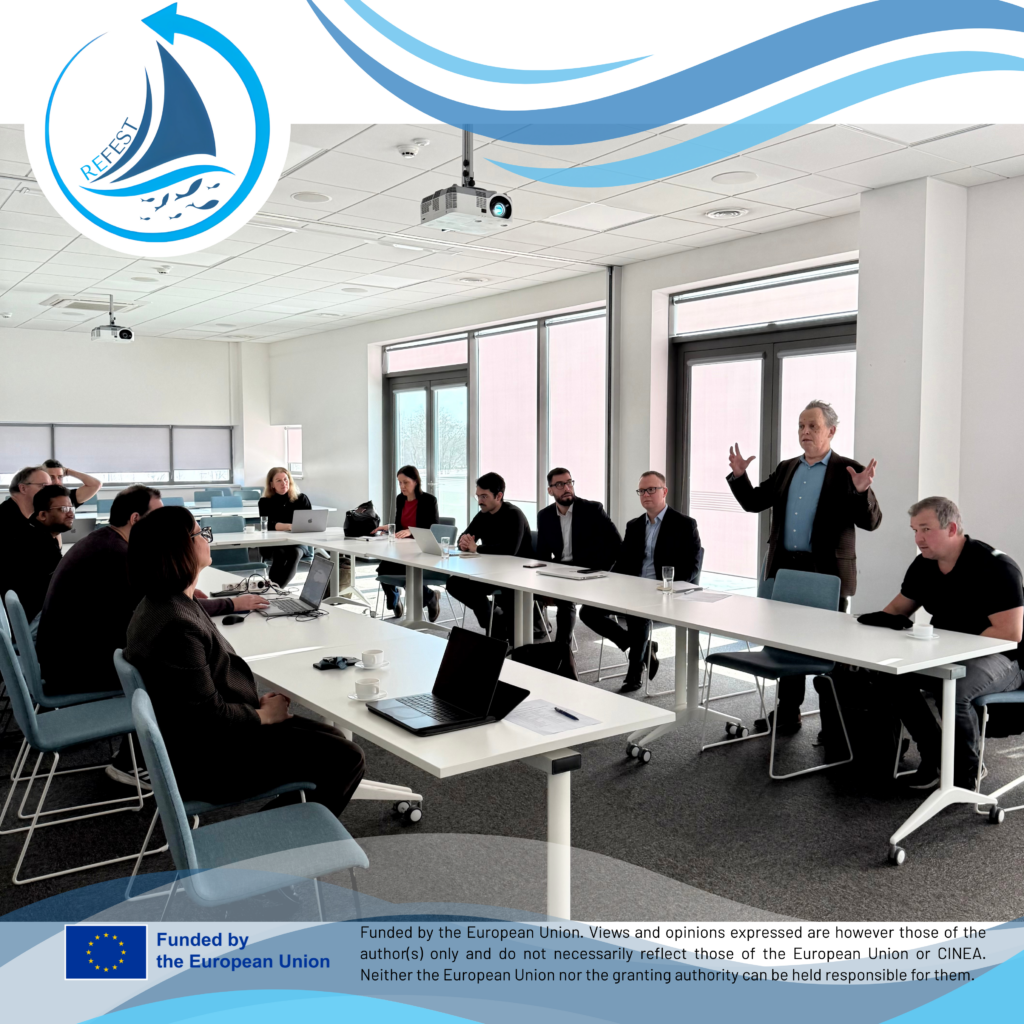
From 4 to 5 March 2026, the REFEST project organized a joint workshop together with SBEES South Baltic Digital Electromobility Enabling Services, an Interreg project, hosted by Klaipėda University.
The meeting brought together researchers, innovators, entrepreneurs, students, and regional stakeholders to exchange knowledge and discuss sustainable development opportunities across the Baltic Sea Region.
SBEES focuses on supporting the transition to electric mobility in the South Baltic region through the development of innovative digital services. The project is creating a suite of tools to help stakeholders plan and implement charging infrastructure, assess electricity storage needs, monitor the use of public charging stations, and explore Vehicle-to-Grid (V2G) solutions. By providing data-driven insights, SBEES aims to support local authorities, energy providers, and other key actors in accelerating the adoption of electric vehicles and advancing sustainable transportation systems.
During the workshop, REFEST had the opportunity to present its objectives and ongoing activities, engaging with participants working on electric mobility, energy management and sustainable transport solutions. The exchange with SBEES was particularly relevant, as both projects address the transition towards cleaner mobility systems, although in different contexts: SBEES focuses on electric mobility and charging infrastructure in the South Baltic region, while REFEST works on the decarbonisation of traditional fishing fleets through practical retrofit solutions.
The discussion highlighted REFEST’s approach to reducing fuel consumption and greenhouse gas emissions by combining technologies such as hybrid propulsion, battery systems, flexible PV panels, smart energy and power management, eco-driving tools and improved vessel efficiency. The workshop opened the door to future exchanges on shared challenges, including electrification, energy storage, charging needs, data-driven planning and the practical deployment of low-emission solutions in real operating environments.